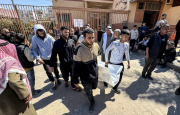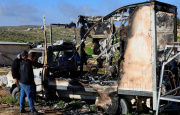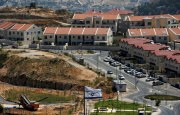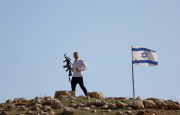



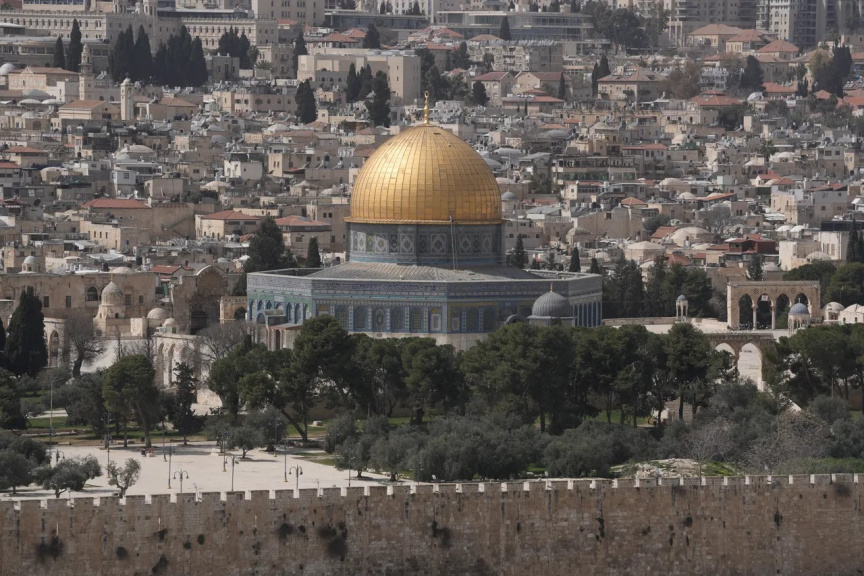
Israeli authorities have banned Eid al-Fitr prayers at Al-Aqsa Mosque in occupied East Jerusalem, citing security restrictions imposed amid the war against Iran. (Photo/AP)
Israeli authorities have effectively barred Eid al-Fitr prayers at the Al-Aqsa Mosque in occupied East Jerusalem. Citing security concerns linked to the ongoing conflict with Iran, the administration has enforced strict assembly bans. Consequently, the usually bustling Old City has remained unusually quiet, with severe restrictions imposed on local businesses and commercial activity. Palestinians have responded by calling for communal prayers near the Old City walls, despite the risk of confrontation with Israeli security forces. This move marks a significant intensification of restrictions, creating a somber atmosphere and causing considerable economic hardship for local traders during the holy occasion.
Israeli authorities have banned Eid al-Fitr prayers at Al-Aqsa Mosque in occupied East Jerusalem, citing security restrictions imposed amid the war against Iran.
Palestinians have called on worshippers to gather near the Old City to perform prayers as close to Al-Aqsa as possible to mark the end of the Muslim fasting month of Ramadan.
Israeli police have previously used batons, sound grenades and tear gas against Palestinians who prayed outside the Old City's walls in protest against restrictions on Al-Aqsa during Ramadan.
Occupied East Jerusalem entered the festive period in a somber mood.
The Old City, which normally fills with Palestinians in the days before Eid, was eerily quiet, resembling a ghost town.
Israel restricted access, citing its assembly ban, while Palestinian shopkeepers were prevented from opening their stores, with only pharmacies and essential food shops permitted to operate.
Palestinian traders, who declined to be named, fearing Israeli reprisals, said the restrictions had left them in severe economic distress.
___
Source: TRT