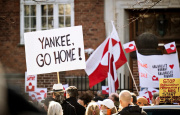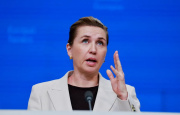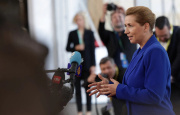



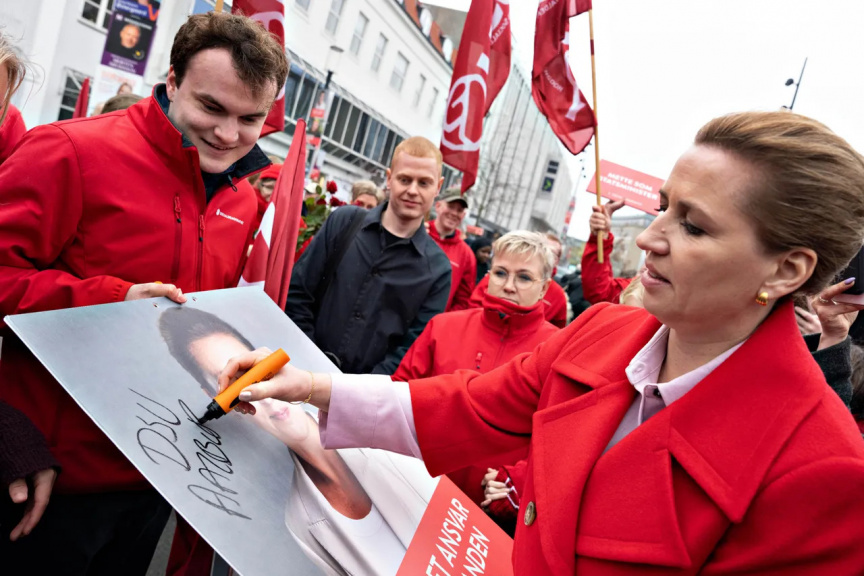
The Social Democrats secured 21.8 percent of the vote, their lowest since 1903. (Photo/AP)
The recent Danish general election has resulted in a precarious political landscape characterized by the Social Democrats holding onto the most seats, yet failing to secure an absolute majority within the 179-seat parliament. Prime Minister Mette Frederiksen, despite facing her party's lowest electoral support levels since 1903, has expressed intent to remain in office and pursue a new mandate. The formation of a government now rests upon the Moderates, led by former Prime Minister Lars Lokke Rasmussen, who have emerged as a critical kingmaker in these negotiations. The political discourse surrounding the election has been notably influenced by debates regarding economic strategy and migration policy, with the latter remaining a central theme in the platforms of several major parties, including the Social Democrats and the surging Danish People's Party. As the political blocs—the left-wing red bloc and the right-wing blue bloc—fail to reach the 90-seat threshold independently, Denmark enters a period of intense coalition building, with the potential for unprecedented cross-bloc cooperation being explored.
Denmark's Social Democrats, led by Prime Minister Mette Frederiksen, have finished first in the general election but posted their weakest showing in more than 120 years, with the left-wing bloc failing to secure a majority.
With all votes counted in metropolitan Denmark, the left bloc has been credited with 84 seats in the 179-seat parliament and the right with 77, while 90 are needed for a majority.
The centrist Moderate party, headed by Foreign Minister Lars Lokke Rasmussen, has emerged as kingmaker with 14 seats, with negotiations expected in the coming weeks to form a coalition government.
Frederiksen, who has been in office since 2019, told supporters she was "ready to take on the responsibility of serving as Denmark's prime minister again for the next four years".
She added that "there is little to suggest that forming a government will be easy."
Lokke called for a cross-bloc coalition.
"We must not be divided. We must not be red (left-wing). We must not be blue (right-wing). We have to work together," he said.
Coalition partner Troels Lund Poulsen of the Liberal Party ruled out forming a new government with the Social Democrats.
"Either we have a centre-right government, or we go in opposition," he said.
Far-right gains
Frederiksen, seen as the favourite ahead of the vote, said her party had expected losses.
"We were expecting to lose ground, that's normal when you run for a third time," she said. "Of course I wish we would have gotten more votes."
The Social Democrats secured 21.8 percent of the vote, their lowest since 1903.
The anti-immigration Danish People's Party more than tripled its support to 9.1 percent.
"A tripling of votes is a remarkable expression of the Danish people in support of my party," leader Morten Messerschmidt said.
Frederiksen said the result showed continued backing for strict migration policies.
"We must control the number of people coming here," she said.
___
Source: TRT