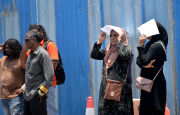



Imaadhudheen School students entering the school at the beginning of the new academic year on August 10, 2021. (Sun Photo/Fayaz Moosa)
As the Maldives experiences its seasonally hottest period, which typically spans from March through April, educational institutions have taken proactive steps to mitigate the impact of extreme heat on students. Many schools have authorized the use of activity uniforms throughout the school week, moving away from standard attire to alleviate discomfort. This decision arises amidst reports of 'feels-like' temperatures reaching 38 degrees Celsius last week, exacerbated by the region's characteristic low wind speeds and high humidity. While the Education Ministry has not yet issued a formal statement, the localized school-level response underscores a widespread awareness of the health risks posed by the current climatic conditions. Public health authorities, particularly the Health Protection Agency, have emphasized the necessity of stringent hydration practices and the avoidance of direct sun exposure to prevent heat-related ailments.
Students have been instructed to wear their activity uniform to school, as the Maldives observes its seasonally warmest period.
Several parents told Sun that they have received messages from the school management saying that students may wear their activity uniform throughout the week in light of the sizzling temperatures.
While multiple parents confirm receiving these notifications, the Education Ministry was not immediately available for comment regarding the decision.
The Maldives generally observes its warmest period from March to April.
The winds tend to weaken during this period, and with clear skies and persistently high humidity, the air temperature becomes more pronounced.
These conditions also reduce the diurnal temperature range, resulting in higher “feels-like” temperature.
Information released by the Maldives Meteorological Service shows the feels-like temperature has risen as high as 38 degrees Celsius last week.
It is expected to be even warmer in April.
The Health Protection Agency (HPA) advises the public to limit outdoor activities during daytime to beat the heat.
Tips shared by HPA: