



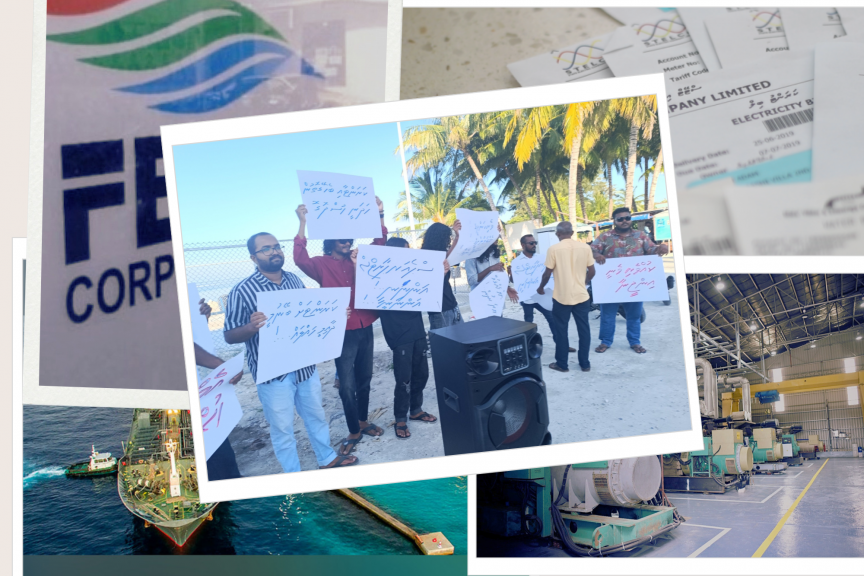
The controversy surrounding the Ramadan electricity subsidy in the Maldives serves as a cautionary tale in public policy and fiscal responsibility. By capping electricity bills at MVR 400 for all households, the government aimed to provide relief during the holy month. However, the mechanism failed to distinguish between socio-economic classes, leading to a situation where the highest consumers of energy received the largest financial support from the state treasury. This outcome has sparked intense debate regarding the role of government subsidies and the necessity of targeted financial assistance. The central issue lies in the indiscriminate nature of the policy. In a functional subsidy framework, assistance should be directed toward those with the least capacity to pay. Under the current Maldivian model, a wealthy household consuming massive amounts of energy through multiple air-conditioning units receives a waiver amounting to thousands of Rufiyaa. Conversely, a low-income family with minimal electrical consumption receives only a marginal benefit. This creates a regressive impact, effectively transferring wealth from the state—and by extension, the taxpayers—to the affluent, rather than alleviating the cost-of-living crisis for the vulnerable. Beyond the social inequity, the policy exerts profound pressure on state-owned enterprises such as STELCO and Fenaka. These entities are already burdened by the high costs of fuel imports and maintenance. With the government capping consumer payments regardless of the actual cost of production, the utility companies are forced to absorb the difference. Reports indicate that these companies often wait for the government to settle these outstanding balances, frequently through the deduction of dividends. This arrangement hampers the companies' liquidity and their ability to invest in necessary upgrades or debt servicing, creating a cycle of dependency and financial instability.
A formerly highly influential political figure recently shared his electricity bill for the past month of Ramadan on social media. This individual, who even now holds a high-paying job, praised the President while sharing the bill, which showed the actual amount payable at over MVR 5,400. However, with the Ramadan discount, he only had to pay MVR 400. He received a waiver of MVR 5,000.
On the other side of the coin is the ordinary citizen whose bill does not even reach MVR 1,000. This person also has to pay exactly MVR 400. By failing to differentiate energy usage or income, the greatest benefit is reaped by the affluent. The question is: is this a coherent state policy?
President Dr. Mohamed Muizzu decided to cap the electricity bill for all household in the Maldives during Ramadan to MVR 400. Under this policy, all domestic-rate customers received this relief, providing significant ease to the general public. The government also covered the MVR 150 WAMCO fee usually included in electricity bills during this period—again, without regard for whether the recipient was wealthy or poor.
Financial experts believe this electricity bill discount is entirely inconsistent. The primary reason is that no distinction was made between those who used excessive amounts of electricity and those who used very little. For example, a wealthy family with several air conditioners running 24 hours a day receives a bill of MVR 5,000 MVR, but has to pay only MVR 400, with the state waiving off the remaining MR 4,600 as relief. Meanwhile, a less fortunate family who live without air conditioning, using only fans and lights, receives a bill of MVR 6oo, but also pay MVR 400, meaning the state provides them with only MVR 200 in aid.
This policy only drives the disparity between the rich and the poor.
Instead of helping those who need it most, it creates a system where the greatest benefit from the state treasury goes to the wealthiest, who consume the highest energy.
Economic experts describe this as a complete violation of the principles of social justice and an inefficient use of state resources.
In addition to capping electricity bills at MVR 400, the government distributed a case of canned tuna to every household for Ramadan, regardless of whether they were rich or poor.
Statistics from the Ministry of Finance show that in 2025, 111,231 households collected these tuna cases, costing MVR 81 million. The state also spent another MVR 140 million on offering discounts on electricity bills. This is a financial burden far beyond what a debt-ridden country can sustain.
The greatest damage from this policy is faced by the utility companies providing electricity—companies like STELCO and Fenaka, which are already struggling.
An official from STELCO stated that providing electricity to the public is already a loss-making endeavor for the company. While it costs the company MVR 3.18 million to produce a single unit of electricity, the lowest billing band is just over one Rufiyaa per unit.
"We incur a loss up to 400 units. Given that, making it so that no bill exceeds 400 MVR—no matter how much is consumed—is a massive loss, even if only for one month," the official said.
He also said that when the government implements such decisions, it often fails to pay the company the required funds. Instead, it is usually settled by deducting the amount from dividends the company owes the government.
"First of all, this is something that didn't need to be done. It is the SOEs [State-Owned Enterprises] that suffer because of this. Governments do these things and then often don't provide the money to the companies," he said.
The Maldives spent MVR 10 billion on fuel imports last year alone. This fuel is heavily subsidized by the state. Electricity services are already provided with these subsidies included. Such moves only worsen the financial burden.
Development of basic infrastructure over temporary benefits
While the government spends such large sums on temporary benefits, the condition of powerhouses in many islands across the Maldives is dire. In Fuvahmulah City, Addu City, and many other islands, frequent power outages have become common. This is due to a lack of adequate capacity in the powerhouses and issues with aging engines.

This is a significant daily hardship for thousands of residents in these cities and islands. Power outages lead to the destruction of expensive electronic equipment in households and cause major losses for businesses.
This is the real problem that needs solving. Millions of Rufiyaa from the state budget should be spent on upgrading the electricity networks in islands and acquiring new engines. However, failing to do that and spending so heavily for temporary political gain in a debt-ridden country is not sustainable.
With the Maldives heavily in debt, the World Bank and the International Monetary Fund (IMF) have consistently urged the government to"targeted subsidies." This means the state should only provide assistance to those who genuinely need it. This is the principle followed even in developed countries.
In those countries, when energy prices rise, subsidies are provided only to identified low-income families, either through direct financial aid or by discounting a specific percentage of the bill.
However, Maldivian politicians act differently. For the sake of political gain, they provide subsidies to everyone equally without differentiating between the rich and the poor, causing the disparity to widen, and the state debt to increase excessively. The World Bank has expressed concern that the Maldives' debt-to-GDP ratio has exceeded 110 percent, repeatedly calling for fiscal reforms to be implemented without delay.
Financial experts suggest that instead of setting a fixed cap on electricity bills, any relief should be given as a percentage based on usage.
The government has announced it plans to transition to a targeted subsidy system.
But with the implementation of that system delayed, the state continues to hemorrhage millions of Rufiyaa.
Establishing a system where subsidies reach only those who truly need help—in line with the advice of international financial institutions—is something that must be done immediately.
Every day this is delayed, the economic situation of the Maldives worsens, and the financial burden that citizens will have to bear in the future increases manifold.
This electricity bill has served as an example of how things should not be done.