


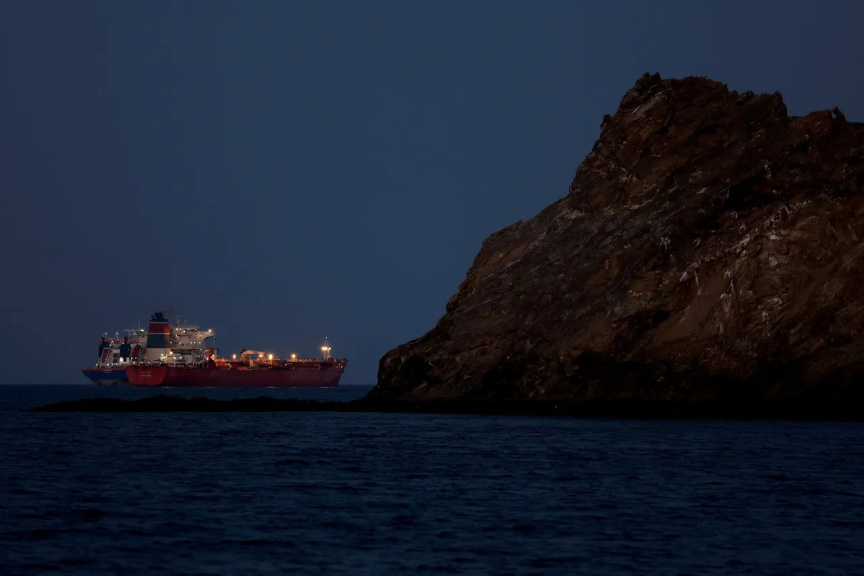
Iran is considering legislation that would require countries to pay fees for vessels transiting the strategic Strait of Hormuz. (Photo/Reuters)
Iran is advancing legislation to impose mandatory tolls on vessels navigating the Strait of Hormuz, citing the provision of security for international energy and food supply chains. This proposal emerges during a period of extreme regional volatility following a joint military offensive by the United States and Israel launched on February 28, 2026. The conflict has resulted in significant casualties, including the death of Supreme Leader Ali Khamenei. As Iran retaliates with military strikes, the closure of this critical waterway has halted the transport of approximately 20 million barrels of oil daily, severely impacting global energy markets.
Iran is considering legislation that would require countries to pay fees for vessels transiting the strategic Strait of Hormuz, Iranian media reported on Thursday.
According to the semi-official ISNA news agency, a draft bill proposes tolls on ships using the vital maritime corridor, one of the world’s most important routes for global energy supplies.
A Tehran lawmaker said the proposal seeks to mandate payments and taxes to Iran if the strait is used as a “safe passage” for shipping, energy transport and food supply chains.
He said countries benefiting from the security of maritime transit through the strait “should pay fees and taxes to Iran.”
The proposal comes as regional escalation has intensified since Israel and the US launched a joint offensive on Iran on February 28, killing around 1,300 people so far, including then-Supreme Leader Ali Khamenei.
Iran has retaliated with drone and missile attacks across the region and has effectively closed the Strait of Hormuz, a key oil transit route that normally handles about 20 million barrels per day and roughly 20 percent of global liquefied natural gas trade, disrupting global energy markets.
___
Source: TRT