


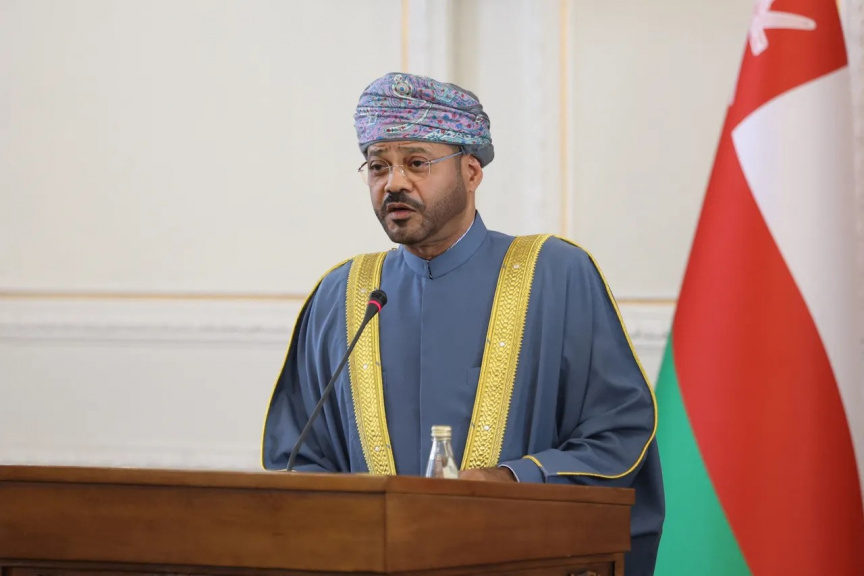
Omani FM Sayyid Badr Albusaidi speaks during a joint press conference his Iranian counterpart, in Tehran, Iran, on December 30, 2024. (Photo/Reuters Archive)
Recent revelations by Omani Foreign Minister Badr Albusaidi indicate that a diplomatic resolution to avert war between the United States and Iran was genuinely achievable through indirect negotiations. Despite substantive progress during back-channel talks in Geneva, including promising proposals from the Iranian delegation, the window for peace was abruptly closed by military action. Albusaidi directly blames Israeli influence for manipulating US policy, arguing that the Trump administration failed to maintain control over its own strategic objectives, ultimately leading to a catastrophic military escalation.
A negotiated deal between the United States and Iran to avert war "appeared really possible", Oman's foreign minister, who mediated talks between the two sides, said in an article published on Thursday, while blaming Israel for the ongoing conflict.
Writing in The Economist, Badr Albusaidi abandoned the usual reserve of diplomatic language to call the war a "catastrophe" and said US President Donald Trump's administration had "lost control of its own foreign policy".
Albusaidi claimed the US and Iran had been "on the verge of a real deal" on Iran's nuclear programme twice over the last nine months, including in June last year when the process ended with Israeli-US attacks on Iran.
He mediated a second round of indirect negotiations, which resumed in Oman on February 6, and the final round was held in Geneva on February 26.
"It was a shock but not a surprise when on February 28 — just a few hours after the latest and most substantive talks — Israel and America again launched an unlawful military strike against the peace that had briefly appeared really possible," Albusaidi wrote.
The details of what was on the table in Geneva are of major significance, experts say, because Trump justified the war by saying Iran posed an "imminent" threat with its nuclear programme.
Albusaidi blamed "Israel's leadership" for persuading Trump that "an unconditional surrender would swiftly follow the initial assault and the assassination of the Supreme Leader" Ali Khamenei, who was killed in the opening salvo of the war.
"The American administration's greatest miscalculation, of course, was allowing itself to be drawn into this war in the first place."
"America's friends have a responsibility to tell the truth," he continued, adding that one of the messages "involves indicating the extent to which America has lost control of its own foreign policy".
The Guardian reported this week that Britain's national security adviser, Jonathan Powell, attended the final round of US-Iran talks in Geneva and viewed Iran's proposals as "significant enough to prevent a rush to war".
"The UK team were surprised by what the Iranians put on the table," an anonymous former official who was briefed on the talks told the newspaper.
The US negotiating team comprised Trump's special envoy, real estate developer Steve Witkoff, and his son-in-law, Jared Kushner, who did not bring a technical team to advise on complex nuclear issues, reports say.
___
Source: TRT